Who's Making the Investment Decisions? Why HORAN Wealth's New CIO Role Matters to Serious Investors
By: HORAN Wealth

When you've built real wealth—through a business, a career, or decades of disciplined saving—you start asking better questions.
Not, "What did the market do today?"
Not, "What's the hot idea?"
The question that signals you're playing at a higher level is simple:
Who Is Actually Making the Investment Decisions—And How?
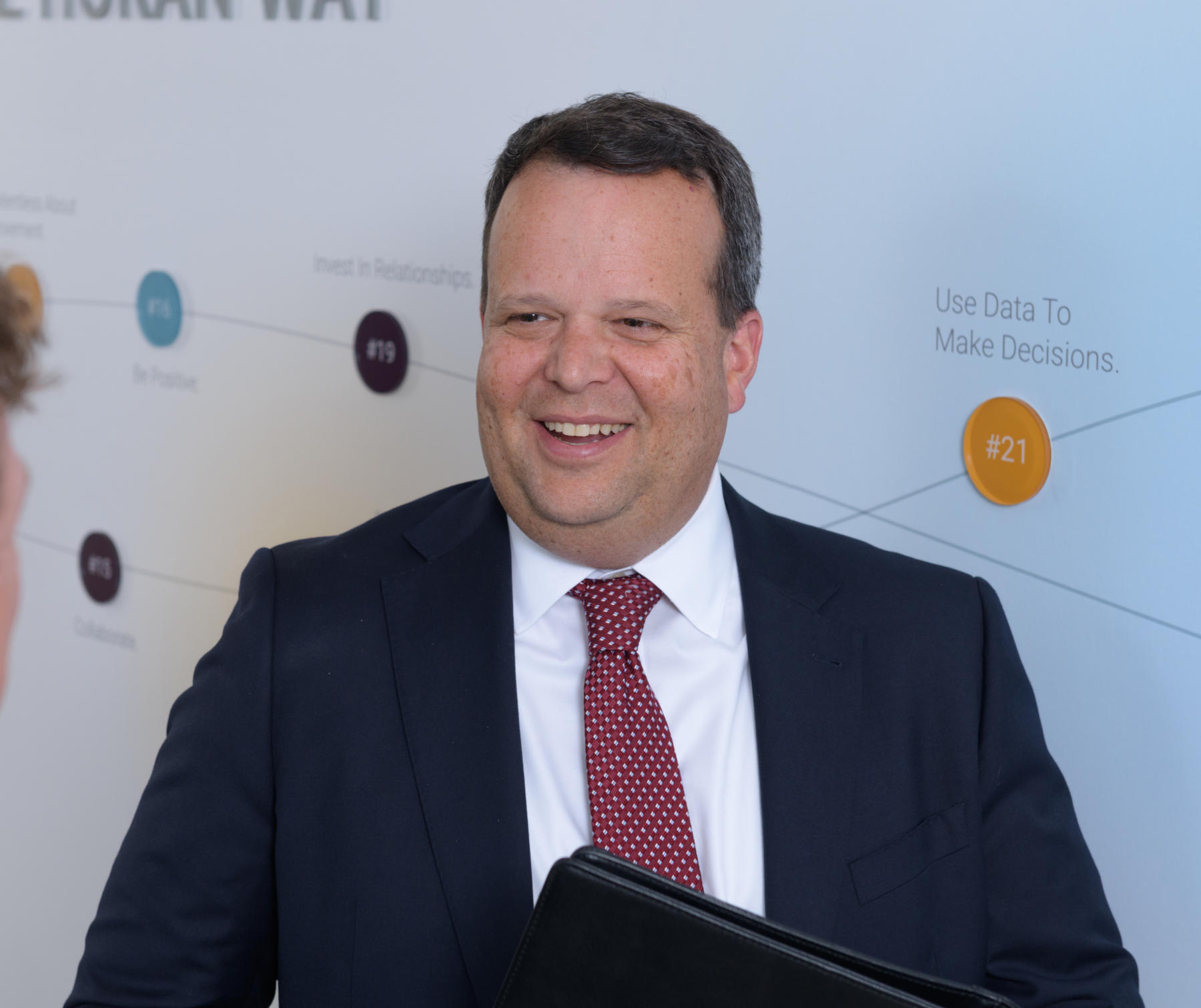
HORAN Wealth recently named David Templeton, CFA®, as Chief Investment Officer. And if you're an astute investor or a Private Wealth client, that move matters for one reason: it makes investment leadership explicit. It clarifies who owns the investment philosophy, the decision-making process, and the accountability that comes with managing complex portfolios through changing markets.
The Real Issue Isn't a Lack of Information—It's Too Much of It
David has been writing and educating clients for decades because he's watched the same pattern repeat: people don't struggle because they can't find information. They struggle because they can't tell what matters.
As he puts it, "Now we're in this environment where it's just too much information out there." The challenge isn't getting data—it's "finding out what information is most useful." That's why, in David's view, "having a process where you can cut through all the smoke... that's what's important today."
That's also why an investment house needs more than good intentions. It needs a repeatable investment process—one that's designed to reduce noise, not amplify it.
What HORAN's Investment Philosophy Actually Looks Like
In plain terms, David describes the philosophy as "high-quality investments that you can purchase at a reasonable price"—what he calls "growth at a reasonable price." That sounds simple, but it's the kind of simplicity that becomes powerful when markets get complicated.
It also explains why HORAN has been especially focused on concentration risk. David notes that "the index is less diversified today, so that's a risk." When a handful of names dominate market leadership, you can feel like you're diversified when you're not.
HORAN's approach is to "provide diversification while maintaining a focus on growth." That's disciplined investing in a sentence: pursue opportunity, but don't confuse a good year with a sound strategy.
The Hidden Value: Discipline That Removes Emotion from the Equation
Most investors don't get into trouble because they're unintelligent. They get into trouble because markets know exactly how to trigger emotion.
David says it plainly: "When it's your own money, you sometimes will make an emotional decision that might be incorrect." And he points to a moment most investors remember: "The COVID market pullback was a perfect example."
In that environment, what matters isn't predictions. It's behavior. Process. Perspective. A steady hand.
That's one of the clearest benefits of working with a disciplined outside investment team: "We're going to be less emotional." Not because emotion disappears—but because the decision-making structure is built to keep it from driving the car.
AI, Investing, and the Difference Between Signals and Decisions
David has an unusually grounded take on AI—interested, engaged, and not the slightest bit dazzled.
"We're using AI internally," he says. The practical value today? "Having AI help pull... the relevant pieces out of the whole web is beneficial." In other words: faster pattern recognition, better signal detection, less wasted time.
But he draws a hard line where disciplined investors should draw it: "You need a human intervention...to analyze that...and make decisions on it."
On the investing side, David believes you can't ignore AI as a market trend: "It's not going away...so you have to be there." But he also warns against assuming today's winners will stay the winners. "We're in the...third or fourth inning of a lot of this," he says—meaning the story is still developing. And historically, market leadership changes: "You look at the top 10 companies in the S&P from decade to decade—they're not the same."
His most practical caution may be the simplest: "How much is too much?" Whether it's valuations, hype circles, or even physical buildout like data centers—disciplined investing means knowing when the narrative has outrun reality.
Why The CIO Role Matters—Especially for Private Wealth and Multi-Generational Families
If you want to understand why a Chief Investment Officer matters, listen to the questions David hears from people of wealth.
"They'll ask you...'who's making the investment decisions? Who's on that...investment committee?"' They're not looking to micromanage. "They're not doing it, and they don't want to do it," David explains. They want to understand the governance behind the portfolio—because they know decision-making structure matters when the stakes are high.
This becomes even more important in Private Wealth relationships, where the goals don't end with one investor's lifetime.
"With larger wealth and families," David says, "you might have the added focus of managing some monies for second and third generations—even fourth generation." And he captures the mindset shift with a line that's both funny and revealing: some people joke, "I want to die and have the check bounced at the funeral home." But wealthy families don't think that way. "They want to be sure...money's left behind," because they're planning in decades, not quarters.
That "long-term, future-focused investment goals and thinking" is exactly why, as David says, "my role and the role of the investment committee is so critical."
A CIO isn't a ceremonial title. It's a governance signal. It means clarity. Consistency. Accountability. Or as David puts it, when firms aren't aligned, "it's confusing...it's not a clear message." The CIO role helps ensure the opposite: one playbook, clear responsibility, disciplined decision-making—delivered to clients who expect their wealth to be managed with the same seriousness they used to build it.
You can also read David's latest market commentary on his blog here: https://horanwealth.com/insights/markets-minute-tariff-cycle. For questions or a direct connection, email David at DavidT@horanwealth.com. To reach HORAN Wealth directly, email privatewealth@horanwealth.com.
About David Templeton, CFA®, Chief Investment Officer & Principal
David Templeton, CFA®, is Chief Investment Officer and Principal at HORAN Wealth, with more than 30 years of financial services experience spanning banking, credit analysis, and the management of institutional, nonprofit, and family investment portfolios. Over the past 15 years at HORAN Wealth, he has been a steady leader in disciplined investing and thoughtful portfolio construction designed to protect and enhance client wealth. As CIO, David leads the team responsible for investment strategy, research, and portfolio management, and he regularly shares practical market insight through his ongoing commentary. He earned his MBA from Xavier University and his BS in Business from Indiana University, and he is a member of CFA Institute® and the CFA Society® of Cincinnati.
About HORAN Wealth
HORAN Wealth is a leading wealth management firm headquartered in Cincinnati, Ohio, with a growing national footprint. As one of the largest independently owned advisory firms in Cincinnati, HORAN Wealth oversees $3.65 billion in assets under advisory and has served clients for over 75 years. The Private Wealth Practice delivers customized guidance in investment, retirement, insurance, estate, tax, and business planning—helping clients build productive and abundant lives across generations. HORAN Wealth has offices in Ohio, Kentucky, and Pennsylvania.
Securities offered through M Holdings Securities, Inc., an unaffiliated registered broker-dealer, member FINRA | SIPC. Investment advisory services offered by HORAN Wealth, LLC, registered with the U.S. Securities and Exchange Commission. Not FDIC Insured | No Bank Guarantee | May Lose Value
The information herein has been obtained from sources believed to be reliable, but we cannot assure its accuracy or completeness. Neither the information nor any opinion expressed constitutes a solicitation for the purchase or sale of any security. Any reference to past performance is not to be implied or construed as a guarantee of future results. Market conditions can vary widely over time, and there is always the potential of losing money when investing in securities. HORAN Wealth and its affiliates do not provide tax, legal, or accounting advice. This material has been prepared for informational purposes only and is not intended to provide and should not be relied on for tax, legal, or accounting advice. You should consult your own tax, legal, and accounting advisors before engaging in any transaction.